A Radical Manifesto
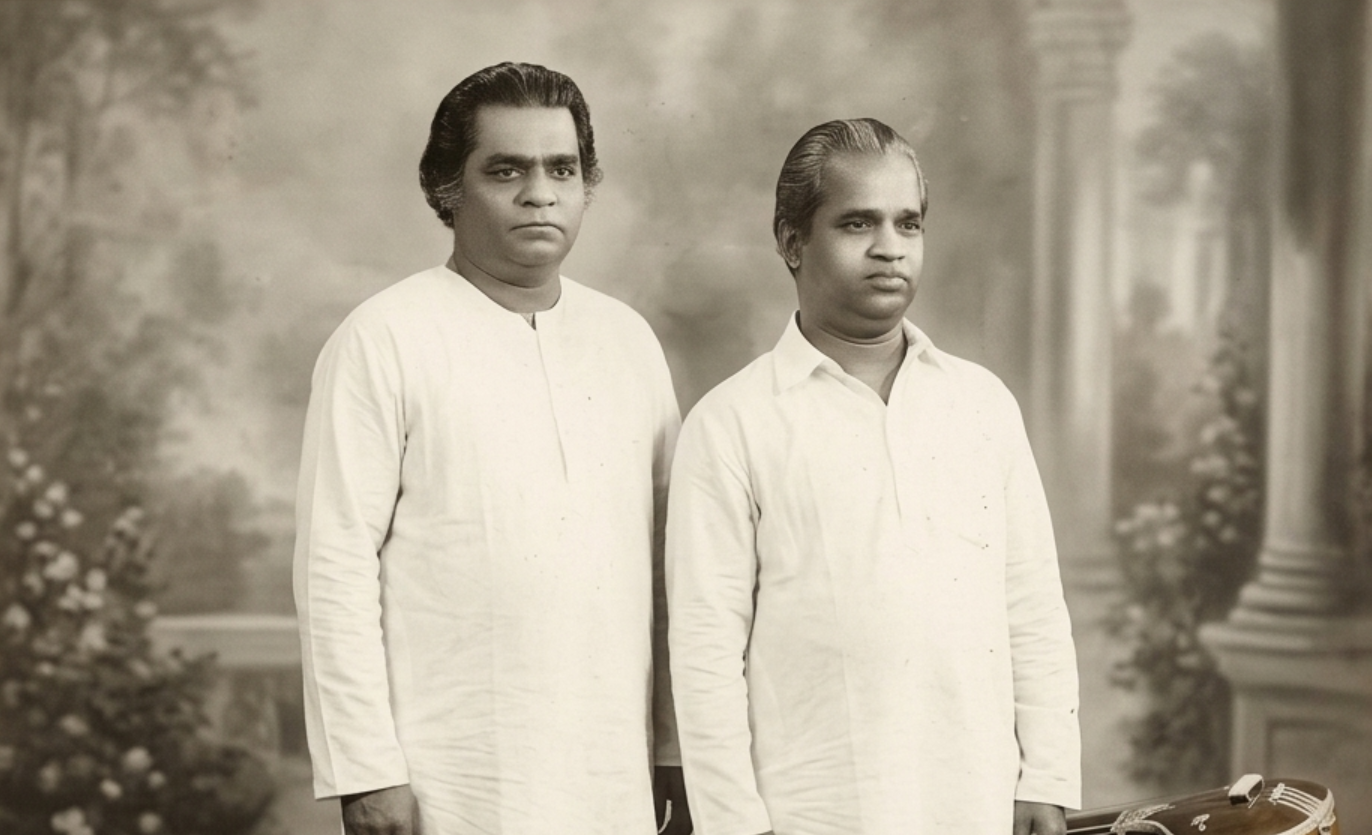
What does it mean to live a “carefree life”? For most people, it means financial security. It means luxury and comfort. For the Balu Brothers, it meant something entirely different. They defined a “carefree life” as one free from greed, deceit, and corruption.
This philosophy was not a secret. They published it openly. In a famous editorial titled “Look at Us!” (Enngalai Parungal), they laid out their manifesto. It was a bold statement. It challenged the very foundations of a materialistic society. This was not just art philosophy. It was a way of life.
Their descendants at Sri Mudhra Arts still carry this philosophy forward. They prove that artistic integrity can transcend generations. This is the story of how two brothers chose peace of mind over piles of money.
The Contrast Between Two Worlds
The editorial began with a powerful comparison. The brothers contrasted their lives with those of wealthy people. They described themselves as simple beings. They ate when hungry. They ate whatever they found. They did not worry about tomorrow.
They wrote: “We do not have to deceive anyone. We do not have to lie. We do not have to steal.” As a result, their faces had no blemishes. Their hearts had no impurities. Their words had no falsehood.
Meanwhile, they observed the wealthy around them. These people had bank accounts full of money. Yet, they had faces full of worry lines. Their minds were full of schemes and lies. Consequently, they could not sleep at night. They could not find peace during the day.
This contrast was striking. The brothers argued that poverty was not the enemy. Instead, greed was the real enemy. This profound insight is a cornerstone of the Sri Mudhra Arts ethos today.
The Simple Joys of a Carefree Life
The Balu Brothers found joy in simplicity. They embraced nature as their friend. Rain, cold, wind, and heat were not obstacles. They were companions. They declared: “We are the most satisfied people in the world!”
They had no fights or quarrels among themselves. They had no ego or pride. Love, compassion, charity, and humility guided their lives. This was not just rhetoric. They lived by these principles every single day.
Their mornings were simple. Their afternoons were uncomplicated. For dinner, they ate whatever was available. If there was no food, they would sleep peacefully. They described hunger as their “treasure.” This was a radical perspective.
In contrast, wealthy people were slaves to their possessions. They worried about thieves. They worried about taxes. They worried about maintaining their status. The brothers concluded that the rich were the real prisoners. The poor, at least, were free.
The Sri Mudhra Arts team often reflects on this philosophy. It reminds them to focus on purpose rather than profit.
The Irony of Wealth
The editorial highlighted a bitter irony. The rich looked down on the poor. Yet, the brothers argued the opposite was true. The rich were the ones suffering. They were the ones trapped in a cycle of desire and anxiety.
“We see worry lines on your faces,” they wrote. “You never find satisfaction. Your house becomes a mansion. Then you want a palace. There is no end to your desires.”
They pointed to broken families. They pointed to unhappy marriages. They pointed to children neglected by work-obsessed parents. The rich had everything but enjoyed nothing. The poor had nothing but enjoyed everything.
This irony was not lost on the brothers. They used it to teach a lesson. True wealth is not in what you own. It is in what you feel. This lesson is central to the work of Sri Mudhra Arts, which seeks to enrich lives through beauty, not status.
The Greatest Treasure: A Clean Conscience
At the heart of their philosophy was the concept of a clean conscience. They had no guilt, no regrets. They did not cheat anyone, not harm anyone. This gave them a sense of inner peace that no amount of money could buy.
They wrote: “We have nothing to hide. Our lives are open books. We are not afraid of anyone or anything.” This was their greatest treasure. It was worth more than gold.
They challenged the wealthy: “Think about your life. Think about the lies you have told. Think about the people you have cheated.” Then they offered a solution: “If you want true happiness, look at us. Follow our example.”
This was not a plea for charity. It was an invitation to freedom, a call to reject the rat race, a path to genuine contentment.
The Sri Mudhra Arts mission is rooted in this same principle. They believe art should inspire, not impress. It should elevate, not exploit.
A Message for Today’s World
The Balu Brothers’ manifesto is surprisingly relevant today. We live in an age of burnout, mental health crises, where people work themselves to death for promotions they don’t even want.
The brothers’ message is clear. Success is not measured by your bank balance. It is measured by your peace of mind. Happiness is not found in possessions. It is found in purpose.
They chose art because it gave them meaning. They chose simplicity because it gave them freedom. They chose integrity because it gave them dignity. They are a reminder that another way of living is possible.
Through Sri Mudhra Arts, their message continues to spread. It inspires new generations to find joy in creativity, encourages artists to stay true to their vision, proves that a “carefree life” is not a fantasy and is a choice.
Conclusion: The Legacy of a Philosophy
The Balu Brothers lived what they preached. They did not die rich. But they died with a clean conscience. They left behind a legacy of art that continues to inspire. They left behind a philosophy that continues to guide.
Their editorial “Look at Us!” was not just a piece of writing. It was a declaration of independence, a manifesto for a better way of life. It is a text that deserves to be read and reread.
The brothers are gone. But their philosophy lives on. Through their art, their words, and the work of Sri Mudhra Arts, they continue to teach us. They teach us that true wealth is not in what we accumulate. It is in who we become.