Introduction: The Architects of an Iconic Image
In the vast landscape of Indian art, certain names are associated with monumental shifts in visual culture. Raja Ravi Varma brought the gods down to earth. The Bengal School rekindled a national spirit. But what about the images that shaped the daily life and identity of millions in South India?
Who visualized the serene, bearded face of the saint Thiruvalluvar? That image hangs in government offices and homes today. Who designed the iconic spinning wheel logo? It preceded every AVM film during Tamil cinema’s golden era.
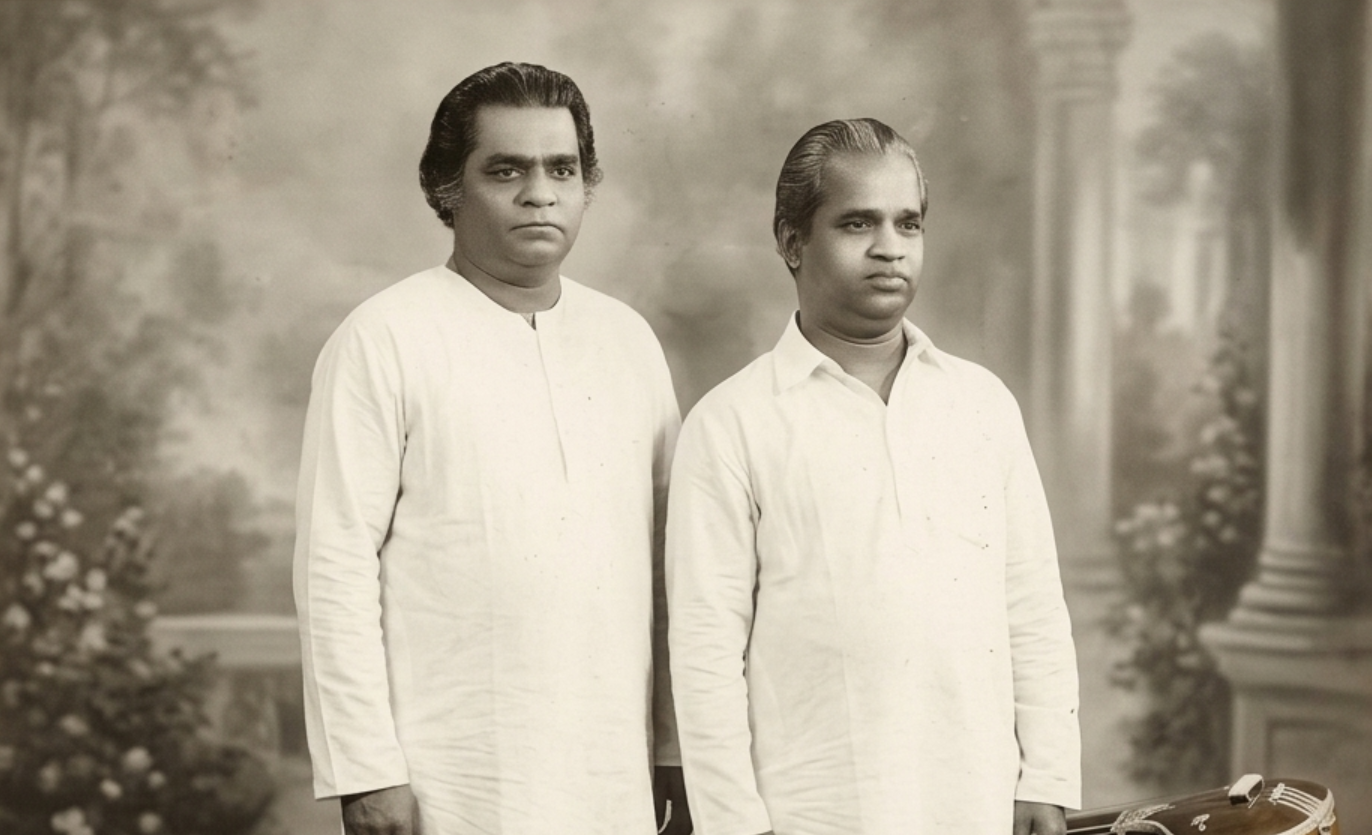
The answer lies in the journey of two brothers from a small village in Tamil Nadu. Their names are Balu and Seenu. Together, they are known as the Balu Brothers.
Today, their great-grandchildren carry this torch forward through Sri Mudhra Arts. This is a testament to the enduring power of a family’s artistic vision. Their story is not just a chapter in art history. It is the foundation upon which a living legacy continues to thrive.
This is the story of how a simple studio named “Kalaikovil” (Temple of Art) became the breeding ground for a creative dynasty. It defined a civilization. This is the Genesis of ‘Balu Bros.’
From Village Roots to Artistic Revolution
Imagine Tamil Nadu in the 1930s and 40s. It was a time of national awakening. Yet, the visual arts were often confined to the temples or the courts. The Balu Brothers had a different vision. They hailed from the fertile soil of the Thanjavur district. This region was the epicenter of classical art and culture.
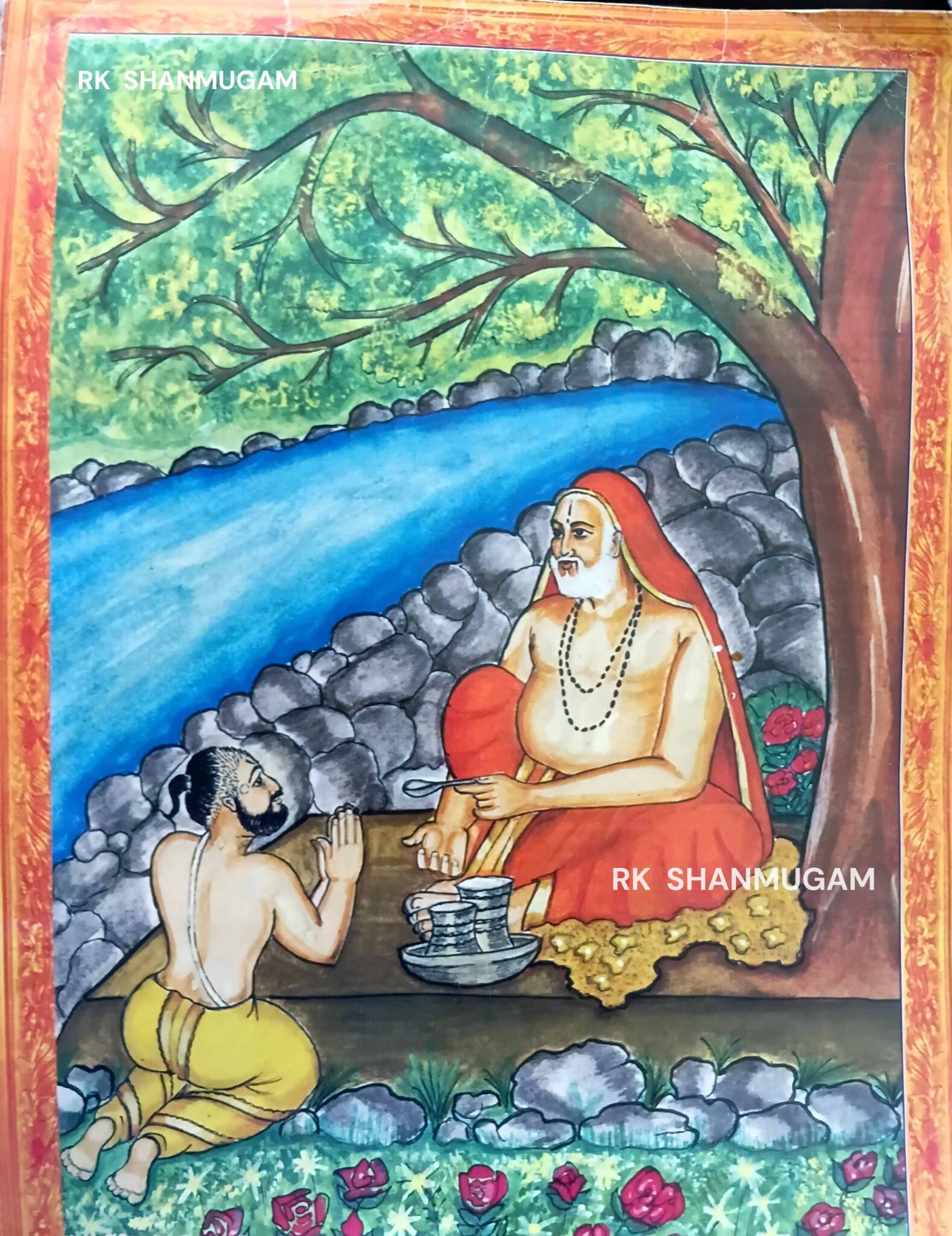
According to a 1958 publication by the brothers, their studio in Chennai (then Madras) became a hub for more than just painting. They understood something crucial. To reach the masses, art needed to transcend its elitist boundaries. Therefore, they began by illustrating the very soul of the Tamil language: its literature.
Their ambition was not merely to create beautiful pictures. Instead, they wanted to create a visual dictionary for their people. They focused on cultural and spiritual tenets. As noted in their own literature, their goal was to create paintings that were “life-like and instructive.” They wanted to bring the “many sayings of our ancient Saint Tiruvalluvar” to the common man. Consequently, they were not just artists. They were visual philosophers.
This philosophy of art as a universal language is precisely what Sri Mudhra Arts champions today. It proves that the brothers’ vision was generations ahead of its time.
The “Temple of Art” (Kalaikovil)
The name “Kalaikovil” is a profound statement of intent. A kovil is a temple. It is a sacred space where devotees go to connect with the divine. By naming their studio this, the Balu Brothers declared that art was their religion. Their studio was their sanctuary.
This philosophy attracted not just clients, but collaborators. Their studio became a meeting ground for writers, poets, and other artists. It was here that the concept of using visual media to interpret classical texts was born. Their first major success involved taking abstract philosophical concepts from ancient poetry. They gave these concepts concrete visual form.
The reverence with which they treated their craft is echoed in the work of Sri Mudhra Arts. Every brushstroke is still approached as a devotional offering. It honors the cultural heritage they inherited.
The 1934 Mahatma Connection
The turning point in their career occurred on February 15, 1934. It was a moment of serendipity and divine intervention. They met the “Father of the Nation,” Mahatma Gandhi, in Koradacheri. Gandhi understood the power of imagery to inspire a nation. He immediately recognized their talent.
He auctioned their paintings. He raised a significant sum for the national cause. Moreover, he gave them a directive that defined their life’s work. He told them: “Use your art for the country.”
This wasn’t just a blessing. It was a mandate. It redefined their artistic purpose. They moved from mere commercial success to cultural and national service. From that point on, their brushstrokes were not just about aesthetics. They were about Swadeshi (self-reliance), unity, and identity.
This spirit of service continues to guide Sri Mudhra Arts. It ensures that the brothers’ mission is preserved for future generations.
Why This Matters Today
In an age dominated by digital imagery and AI, the story of the Balu Brothers serves as a poignant reminder. It reminds us of the power of “hand-crafted” vision. They gave a face to the Tamil spirit. Their work in films, publications, and advertising shaped the visual language of a generation.
The Balu Brothers didn’t just paint pictures. They defined how a civilization sees itself. Furthermore, through the dedicated work of Sri Mudhra Arts, that legacy remains vibrantly alive. It serves as a bridge between the past, present, and future of Indian art.